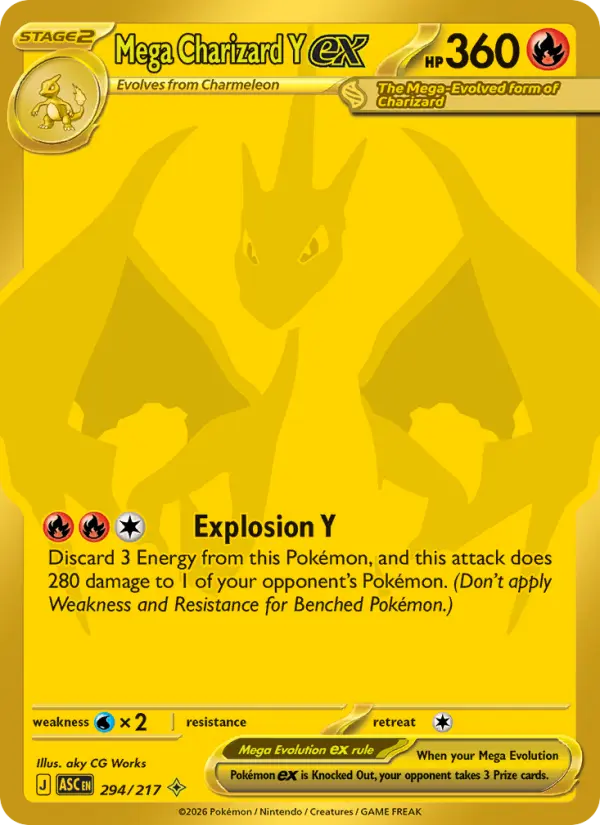
 Mega Charizard Y ex
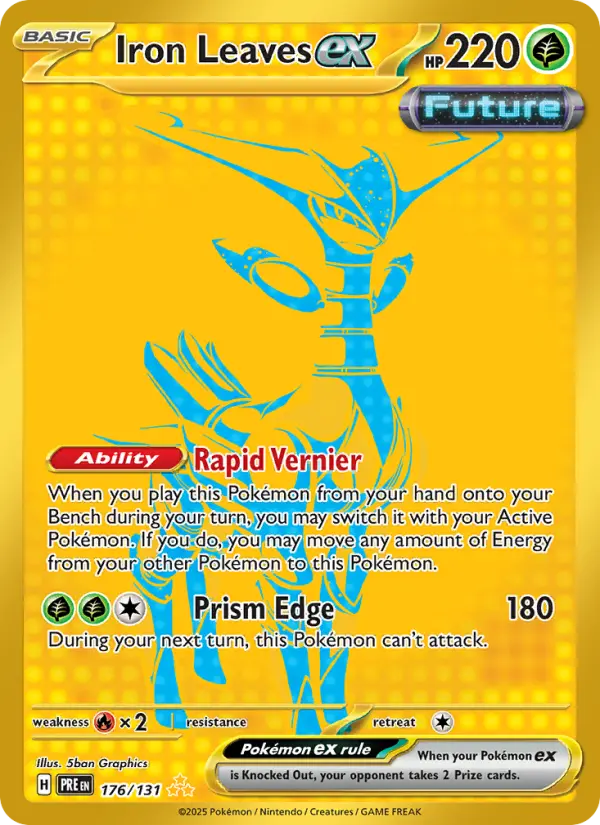
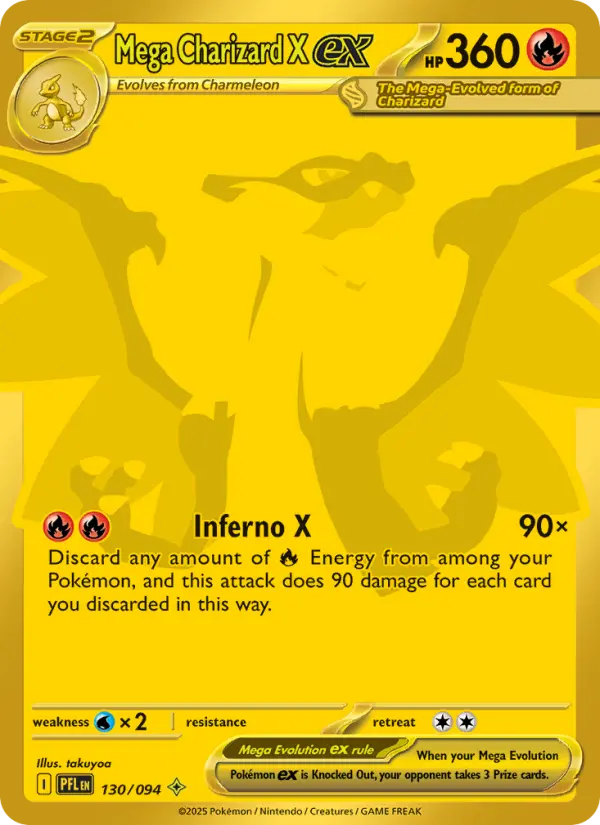
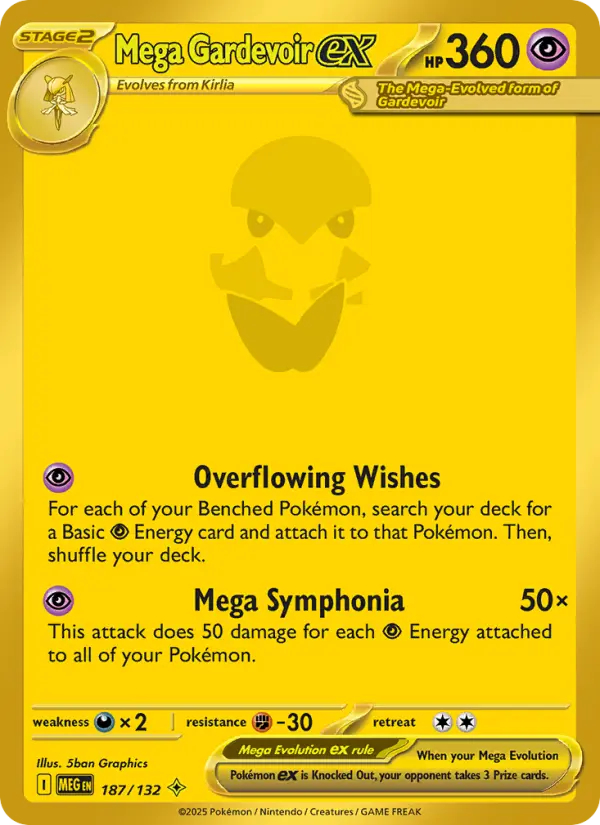
SOURCE TRANSPARENCY
Pull rates
RarityRateSourceConfidenceCards
SIDE BY SIDE
Pull rates side by side: Ascended Heroes, Prismatic Evolutions and Phantasmal Flames
Each column shows an absolute per-pack rate from its published sample, not a per-card estimate. This table compares three sets side by side; all six sets with published English samples are compared on the set list page, while Delta Reign still has no published English sample.
Swipe to compare all three sets
| Rarity | Ascended Heroes pull rates | Prismatic Evolutions pull rates | Phantasmal Flames pull rates |
|---|---|---|---|
| Double Rare | 20.37% ±1.70% (≈1 in 5) | 16.51% ±2.05% (≈1 in 6) | 20.77% ±1.12% (≈1 in 5) |
| Ultra Rare | 4.81% ±0.90% (≈1 in 21) | 7.46% ±1.45% (≈1 in 13) | 8.06% ±0.75% (≈1 in 12) |
| Illustration Rare | 11.25% ±1.33% (≈1 in 9) | Not a tier in this set | 10.97% ±0.86% (≈1 in 9) |
| Special Illustration Rare | 1.44% ±0.50% (≈1 in 69) | 2.22% ±0.81% (≈1 in 45) | 1.25% ±0.31% (≈1 in 80) |
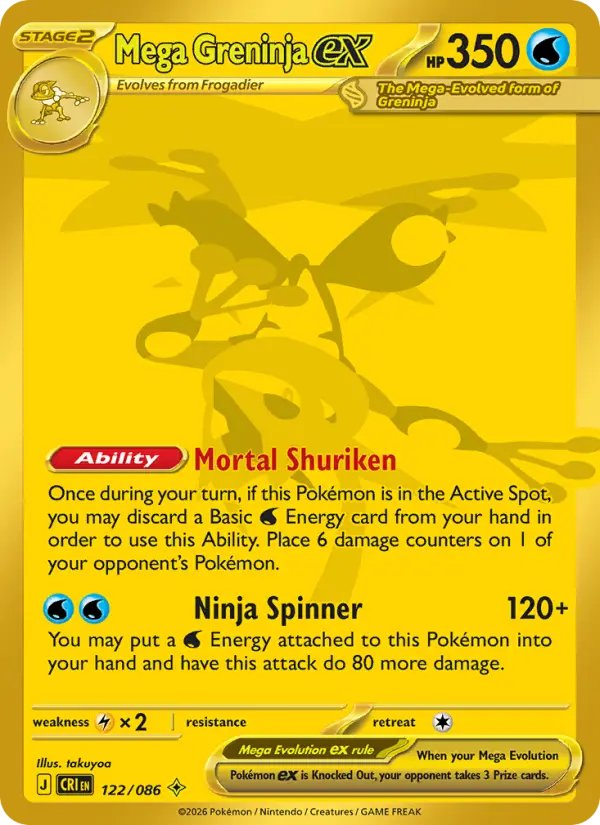
| Rarest published tier | Mega Hyper Rare 0.19% ±0.18% (≈1 in 526) | Hyper Rare 0.56% ±0.41% (≈1 in 179) | Mega Hyper Rare 0.08% ±0.08% (≈1 in 1,250) |
Mega Hyper Rare is modeled as an independent per-pack event, not as a slot rate.
Set-specific tiers: Ascended Heroes includes Mega Attack Rare at 3.47% ±0.77% (≈1 in 29) across 7 cards. Prismatic Evolutions includes ACE SPEC Rare at 4.68% ±1.17% (≈1 in 21), Poké Ball Foil at 33.10% ±2.60% (≈1 in 3) and Master Ball Foil at 4.92% ±1.19% (≈1 in 20).
The complete side-by-side comparison for all six sampled sets, including Mega Evolution, Chaos Rising and Destined Rivals, is on the set list page.
How the simulator builds a pack
Every pack contains 10 cards. The engine draws the Rare slot, then the first Reverse Holo slot, then the second Reverse Holo slot. The remaining 7 positions come from the combined ordinary-card pool without replacement.
A rarity listed in a slot never competes with a rarity in another. If no listed tier wins a slot, that slot falls back to its ordinary card. That is why a Special Illustration Rare appears about once every 69 packs in Ascended Heroes, once every 45 packs in Prismatic Evolutions and once every 80 packs in Phantasmal Flames.
Mega Hyper Rare is the exception. The published sources do not place it in a slot, so PullSim draws it as an independent per-pack event. When it hits, it replaces a filler card and the pack still contains 10 cards.
Why these pull rates are different
Every tier carries its source article, update date, sample size and confidence interval. Those details show where the estimate came from and how much uncertainty remains.
PullSim never normalizes a slot. Tier rates are already absolute per-pack probabilities, and rescaling them to fill the whole slot would manufacture a different number. The unassigned probability remains with the ordinary card.
When a source contradicts itself, PullSim preserves both reported figures instead of quietly blending them. Read the full method, including the recorded source conflicts, in how we calculate pull rates.
What you can do with the pack simulator
PullSim works as a Pokemon TCG pack opening simulator and as a pull-rate checker on the same page. You can open a booster pack, read the ten cards you drew, and then check the same tier's published rate in the table above. It runs in the browser with no download and no signup, so a booster pack opener is one click away on desktop or mobile. Each set page lists the full card pool, which is what makes a draw checkable rather than a black box. For anyone who wants to open Pokemon packs, the same flow works as a card opening simulator: draw from the published pool, then check the selected tier against the rate table.
Common questions
Is PullSim free?
Yes. Opening packs costs nothing and needs no account. There is no virtual currency and no purchase path.
Are these the real pull rates?
They are observed rates published by the TCGplayer Authentication Center and reproduced without adjustment. Each row includes its sample size and confidence interval; no sample can guarantee the contents of a particular box or case.
How accurate is a 1,200-pack sample?
A sample this size can pin down a common tier; it cannot pin down a one-in-two-hundred hit. In Prismatic Evolutions, Ultra Rare is 7.46% ±1.45%, while Hyper Rare is 0.56% ±0.41%, or about 1 in 179 — an interval nearly as wide as the rate itself.
Can I pull a God Pack?
Not in the current model. The source articles describe special pack configurations, but their independent rate is not established for simulation. A null rate means “not established,” never zero.
Where do the card images come from?
Card names, identifiers and artwork come from TCGdex, an open community database. TCGdex defines which cards can appear within a rarity; it does not decide that rarity's pull rate.
Which set has the best pull rates?
Across the six sets with published English samples, the highest rarest-tier rate is Destined Rivals Hyper Rare at 0.67% per pack, or about 1 in 149. Next is Prismatic Evolutions Hyper Rare at 0.56%, or about 1 in 179. The lowest are Phantasmal Flames and Mega Evolution Mega Hyper Rare at 0.08% per pack. The full comparison, with sample sizes, is on the set list page.
When does Delta Reign come out?
Delta Reign is out now — released November 6, 2026, with prerelease events starting October 24, 2026. PullSim lists the set and the five tiers it will track, but every rate stays pending until a source publishes counted English packs. We do not translate Japanese rates into English ones, and pending is never shown as zero.
Do pull rates change from pack to pack?
No. Every row is a per-pack average across the whole counted sample, so the same tier carries the same chance in every pack of that set. What varies is your luck over a small number of packs: a 0.56% tier is about 1 in 179 packs, so a single booster box can easily contain none. The confidence interval on each row shows how far the estimate itself could move.
What does one simulated card pack include?
Each opening models the 10-card structure described in PullSim's method, drawing from the set's rare, reverse-holo, and filler pools without replacement. The card pack simulator first chooses a tier outcome from the published per-pack rate, then selects an eligible card from that tier's verified pool, so the probability and the card choice remain separate and inspectable.
Is PullSim a pack opening game or a pull-rate reference?
PullSim can feel like a pack opening game because you reveal a complete pack, but it is also a reference built around sourced data. It has no virtual currency and no purchase path. Results come from published samples ranging from 2,000 to 8,500 packs, so progress is driven by opening and checking outcomes, not by earning or spending tokens.
How is PullSim different from another TCG simulator?
PullSim separates card eligibility from probability instead of treating every card as one flat outcome. In this TCG simulator, the verified card pool determines which cards can be drawn after a tier is selected, while the tier probability comes from published samples ranging from 2,000 to 8,500 packs. That makes the card simulator's inputs visible and auditable.